
Are you giving people the Schitt's?
Here’s what I mean.
It’s one of my favourite clips from Schitt’s Creek. An adult son and his mother are trying to cook.
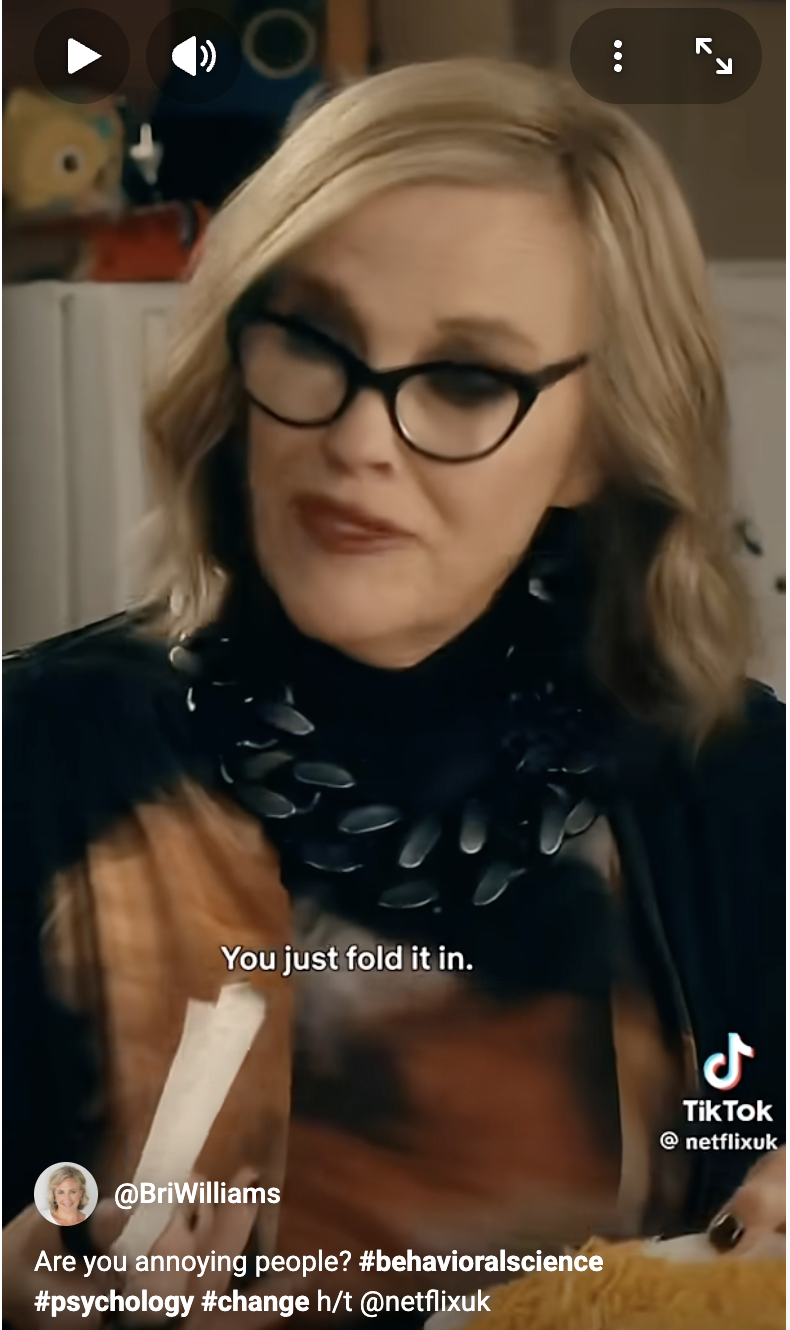
David: “The next step is to fold in the cheese. What does that mean?”
Moira, smugly: “You fold it in.”
David: “I understand that, but how?”
Moira: “David, I cannot show you everything.”
David: “Okay, well, can you show me one thing?”
Moira, cornered: “You just… fold it in.”
Like all great humour, it’s funny because it’s familiar.
We see this dynamic everywhere.
Assumed knowledge.
The gap between the person giving the instructions and the person trying to use them.
From flat packs to workplace policies and instruction manuals, this scene captures two cognitive biases that show up a lot.
1. The Curse of Knowledge
Once we know something, we forget what it’s like not to.
We explain from an expert’s perspective, not a beginner’s.
2. The Illusion of Explanatory Depth
We think we understand something…until we’re forced to explain it step by step.
Moira knows the label. She doesn’t know the mechanics. When pressed, she gets evasive.
And that’s how we end up with what I call zombie verbs.
Words that sound like actions but contain no actual instruction:
Leverage
Optimise
Implement
Embed
Activate
They sound impressive.
But they don’t tell us what to do.
Helpful communication isn’t about signalling expertise. That’s ego.
It’s about transferring capability.
If someone can’t act on what you’ve communicated, you haven’t explained it.
You’ve just given them the Schitt’s.

P.S. Thanks for being a subscriber. I share ideas about behavioural science every Monday, Wednesday and Friday 😊.
🌟 If you found this interesting, let me know! Buy me a virtual coffee ☕ or forward this email ↗️ to someone who also might like it. Your occasional support means I can keep sharing ideas about behavioural science for free.
🧠 Learn the science of Influencing Action
Hey, are we connected yet?


