
Are sunrise clocks worth it?
One of the reasons I love summer is you naturally wake up early.
But in darker months, it’s hard to get up.
So, I’ve been using a sunrise clock.
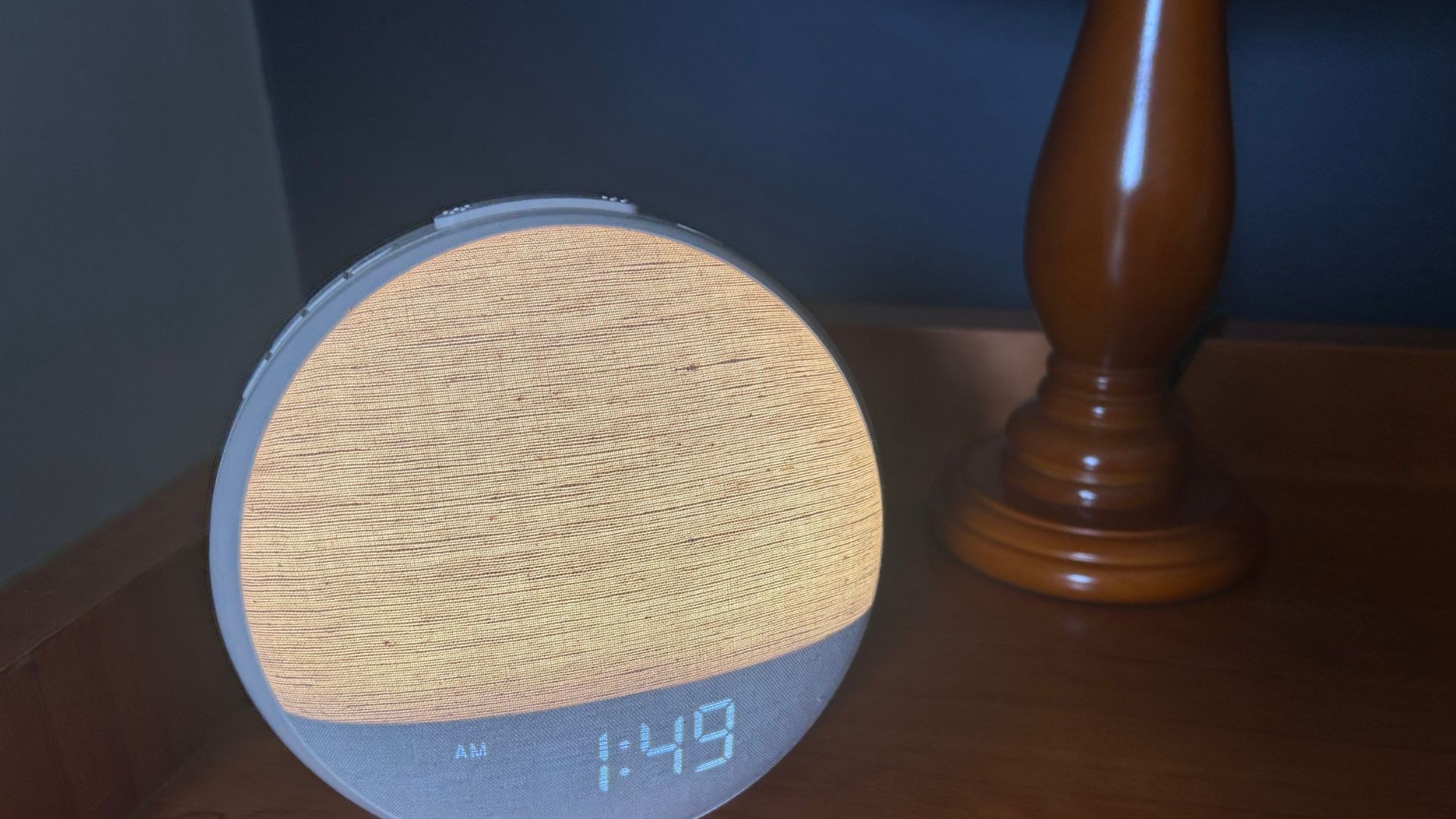
It simulates a sunrise, turning from red to bright yellow over a period of time, say 10 or 30 minutes.
And I love it.
It works because light is one of the strongest signals for your body clock.
Research backs this up.
Simulating dawn light before waking improves alertness, reaction time, and even physical performance compared to waking in darkness.
That’s because as light increases, your body suppresses melatonin (the sleep hormone) and increases cortisol (the “let’s get ready for action” hormone).
This is another example of one of the most important lessons of behavioural science.
Environment shapes behaviour.
So, is it worth it?
For me, yes.
But what about you? Have you tried a sunrise clock?
If not, how do you wake up?

Ref: Thompson A, Jones H, Gregson W, Atkinson G. Effects of dawn simulation on markers of sleep inertia and post-waking performance in humans. Eur J Appl Physiol. 2014 May;114(5):1049-56. doi: 10.1007/s00421-014-2831-z. Epub 2014 Feb 11. PMID: 24509892
🌟 If you found this interesting, let me know! Buy me a virtual coffee ☕ or forward this email ↗️ to someone who also might like it. Your support means I can keep sharing ideas about behavioural science for free.
🧠 Learn the science of Influencing Action
Hey, are we connected yet?


