
When communicating with customers, it’s often a business’ aim to stand out.
Often, not always.
HiSmile, a toothpaste and dental care company, was fined almost $140,000 by the Australian Competition and Consumer Commission (ACCC) for misleading advertising.
They used their employees for fake customer testimonials and exaggerated the effectiveness of some products.
As part of their penalty, they were required to publish a notice of the ACCC’s findings on their website and social media.
And this is where it gets interesting.
Because as @geebunglow on TikTok so brilliantly showcases, the post seems to be a little bit…um, buried.
Lost in a sea of bulk posted, text-based pink tiles.
(The ACCC related post is "A formal statement", near the heart reaction.)
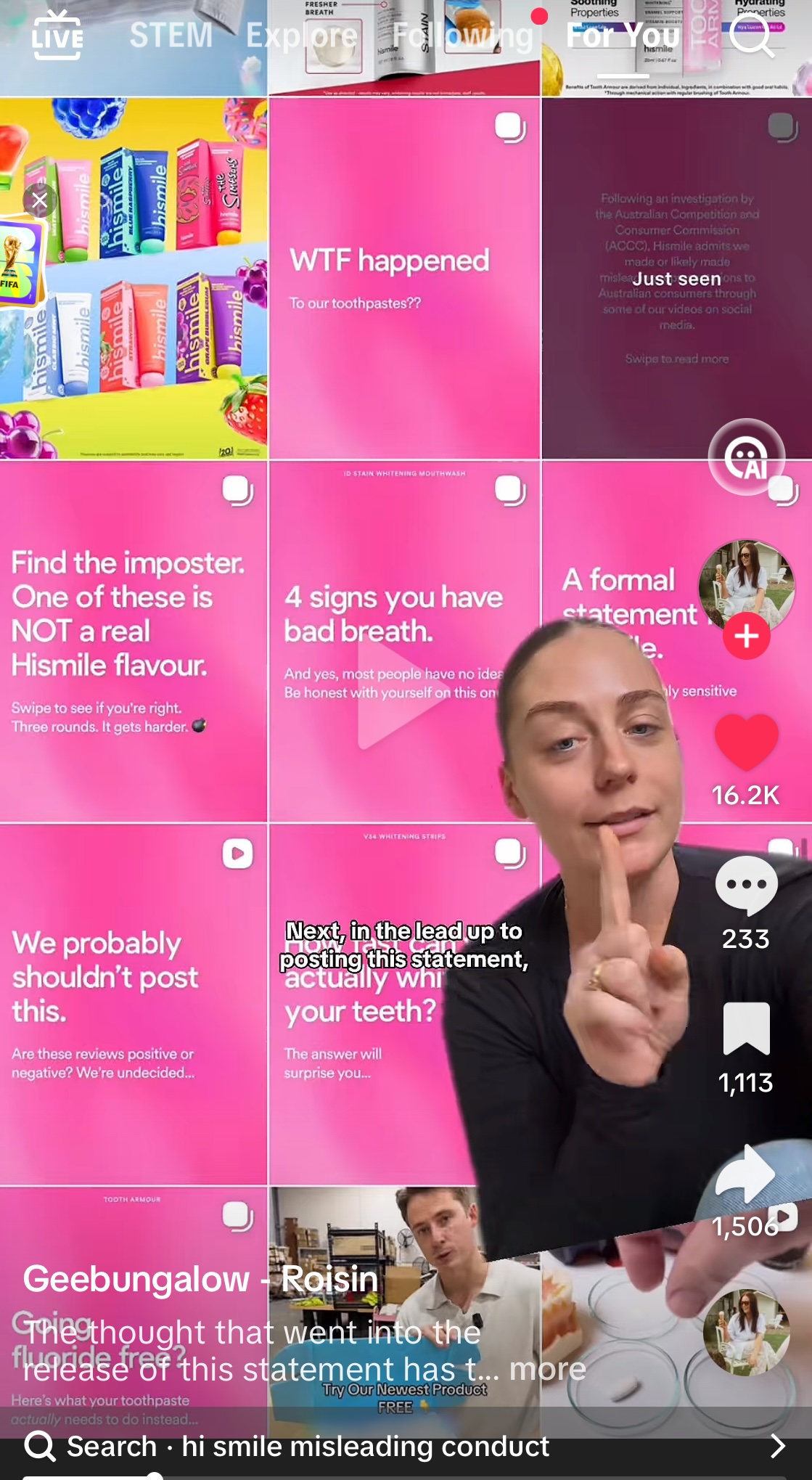
Was this deliberate?
Not for me to say.
But it illustrates how design can be used to obscure as well as attract.
Too much colour, too much sameness, we tune out.
People are attracted to variety. To novelty.
So the best way to get people to ignore what you’re sharing?
Make it look like everything else.

🌟 If you found this interesting, let me know! Buy me a virtual coffee ☕ or forward this email ↗️ to someone who also might like it. Your support means I can keep sharing ideas about behavioural science for free.
💪 Find out where your team can do better (influencing diagnostic)
📈 Take your team to the next level of influence (team development)
🧠 Learn the science of Influencing Action (online course)
Hey, are we connected yet?


