
More pressure isn't the answer.
When we're trying to unblock procrastination, we tend to think pressure will do the trick.
Tighter deadlines, more check-ins, and an uncomfortable conversation in the next one-to-one.
Sometimes it works. Often it doesn't. Occasionally it makes things significantly worse.
That’s because there isn’t only one reason people procrastinate.
There's two.
I've been analysing 306 responses to my Habits Inventory. Procrastination at work was one of the most common struggles.
But the cause wasn't always what people assumed: a lack of motivation.
Instead, it was this: A lack of clarity.
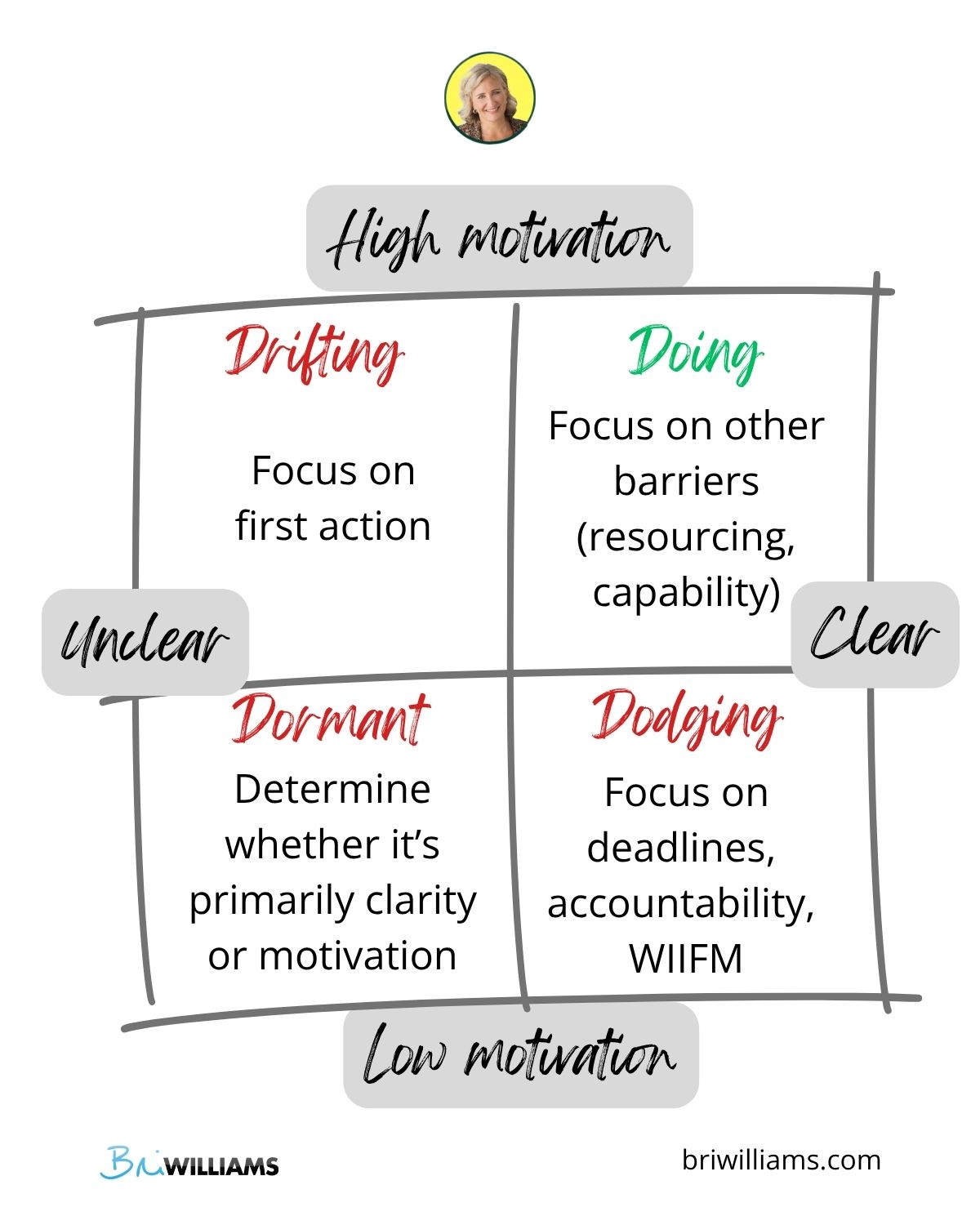
Viewing procrastination as a function of clarity x motivation gives us four behaviours to manage:
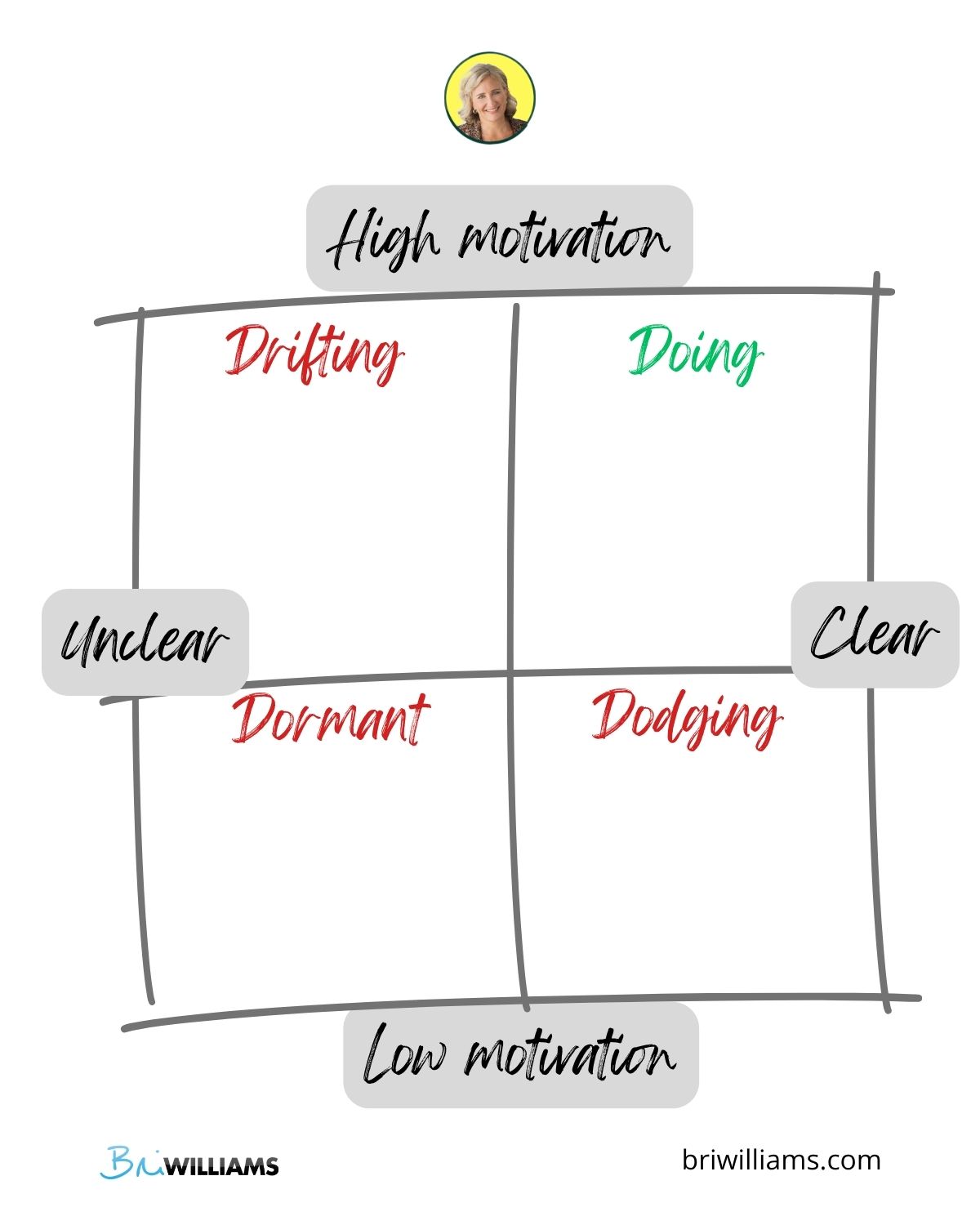
DOING – high clarity, high motivation
This person isn't procrastinating, so if they're still not acting, it's something else. Your job here is to remove blockers, not add pressure.
DODGING – high clarity, low motivation
They know exactly what to do, they just don't want to do it. This is when pressure can help, along with a WIIFM.
DRIFTING – low clarity, high motivation
They want to get it done, they just can't work out how to start. Pressure doesn't help. What they need is clarity.
DORMANT– low clarity, low motivation
This is the hardest state because they neither want to proceed or know how to. Ask: 'Do you know what the first step would be?' If they do, clarity isn't the issue so dig into what's making the task feel difficult to engage with.

🌟 If you found this interesting, let me know! Buy me a virtual coffee ☕ or forward this email ↗️ to someone who also might like it. Your support means I can keep sharing ideas about behavioural science for free.
💪 Find out where your team can do better (influencing diagnostic)
📈 Take your team to the next level of influence (team development)
🧠 Learn the science of Influencing Action (online course)
Hey, are we connected yet?


