
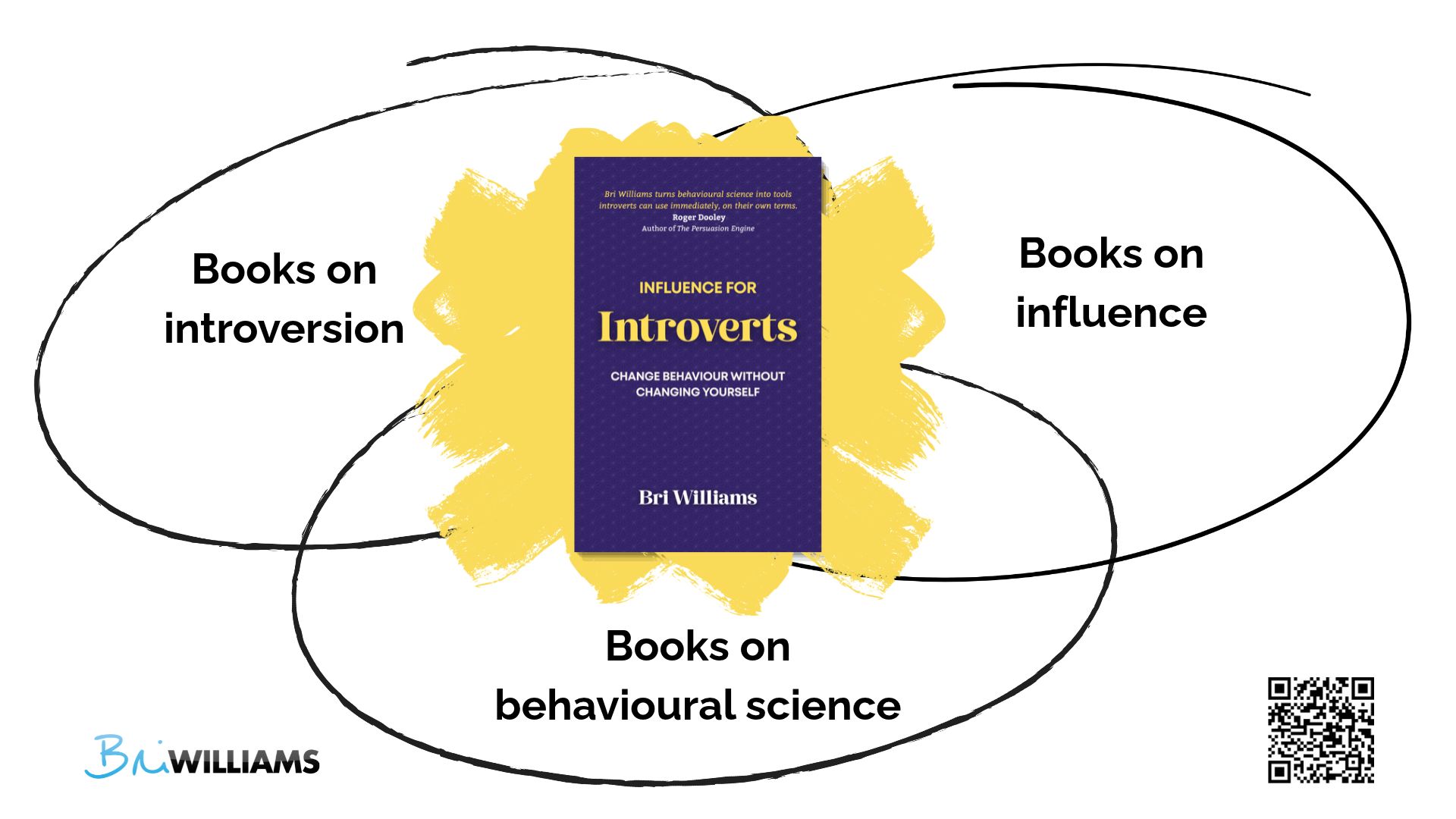
Most books on influence assume it means in person, in the moment. Convincing someone to accept your offer or buy your idea.
Most books on introversion are about validation. Pointing to differences and helping introverts cope in an extroverted world.
And books on behavioural science explain why people do what they do. But they rarely consider who’s doing the influencing, or what it costs them.
Which leaves introverts with the same question every day. How can I influence effectively while staying true to myself and protecting my energy?
I wanted to put behavioural science to work on that question.
What if influence wasn’t about convincing people, but about designing conditions to address predictable reasons for resistance?
What if introverts could use what they already do well (reflecting, observing, preparing) to influence action, whether they’re in a meeting, sending an email, or getting a teenager to pick up their wet towel?
That’s what Influence for Introverts is about. Change behaviour without changing yourself.
As Christian Hunt, founder of Human Risk Limited, says, “Bri Williams gets something most influence books miss: you don't have to be the loudest person in the room to change minds. It isn't about charisma or forcing yourself to be more outgoing.”
Are you an introvert? Find out with this short quiz.
Tomorrow: why is Influence for Introverts important right now?

🌟 If you found this interesting, let me know! Buy me a virtual coffee ☕ or forward this email ↗️ to someone who also might like it. Your support means I can keep sharing ideas about behavioural science for free.
💪 Find out where your team can do better (influencing diagnostic)
📈 Take your team to the next level of influence (team development)
🧠 Learn the science of Influencing Action (online course)
Hey, are we connected yet?


