

Don't be annoyed. Be effective.
Use behavioural science to influence business outcomes.
All Posts

Tenny
I’ve been looking after a friend’s dog, Tenny.
Tenny spends an enormous amount of energy trying to anticipate my next move.
Sometimes he’s right....

Corks
I keep a wine cork on my desk to remind me of one of the most remarkable large-scale behaviour changes in business, and one we...

We don't like to think
If mental effort is unpleasant, why do people seek it out?
That was the paradox researchers were keen to explore.
Across a meta-analysis...

Tough conversations
Many of us fear tough conversations.
So we put them off.
Or we exhaust ourselves by mentally rehearsing every possible scenario.
We inflate...

Do they want to change?
Does the person you’re trying to influence want to change?
The answer to that question will direct how you are best to influence action....

Yours or theirs?
Before you create your message – that next email or presentation – this might help.
Don’t think of it as your output.
Think of it...
Snackable behaviour
A couple of months ago, LinkedIn recognised me as a Top Voice.
At first, I didn’t realise what a big deal it was.
It only...
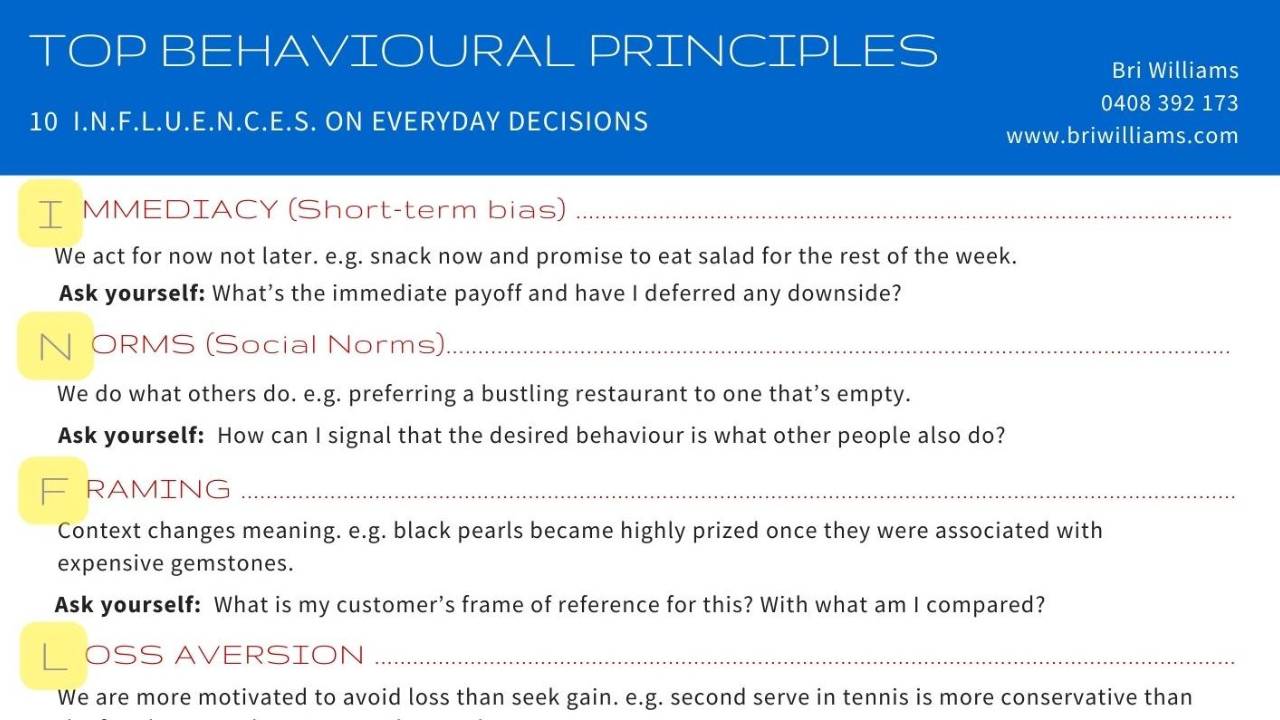
Don't use this list
Behavioural science has identified hundreds of biases and heuristics.
If I had to narrow them down, I’d choose 10 “I.N.F.L.U.E.N.C.E.S.” – the ones that...

Space Invaders
Space Invaders is a TV show that follows people as they declutter their homes, and it’s fascinating, not just for the before-and-after shots, but...
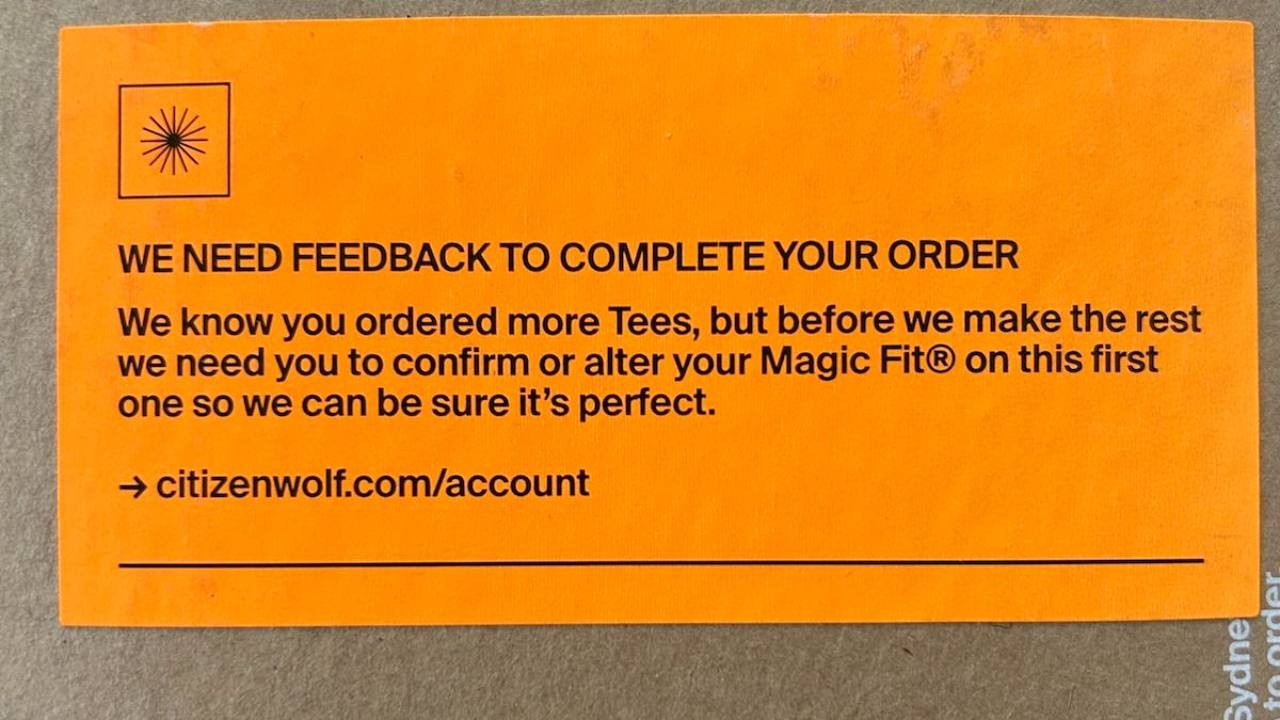
The missing t-shirt
I ordered two t-shirts from a local Australian business.
Only one arrived.
You can imagine the irritation.
Not only would I have to wait...
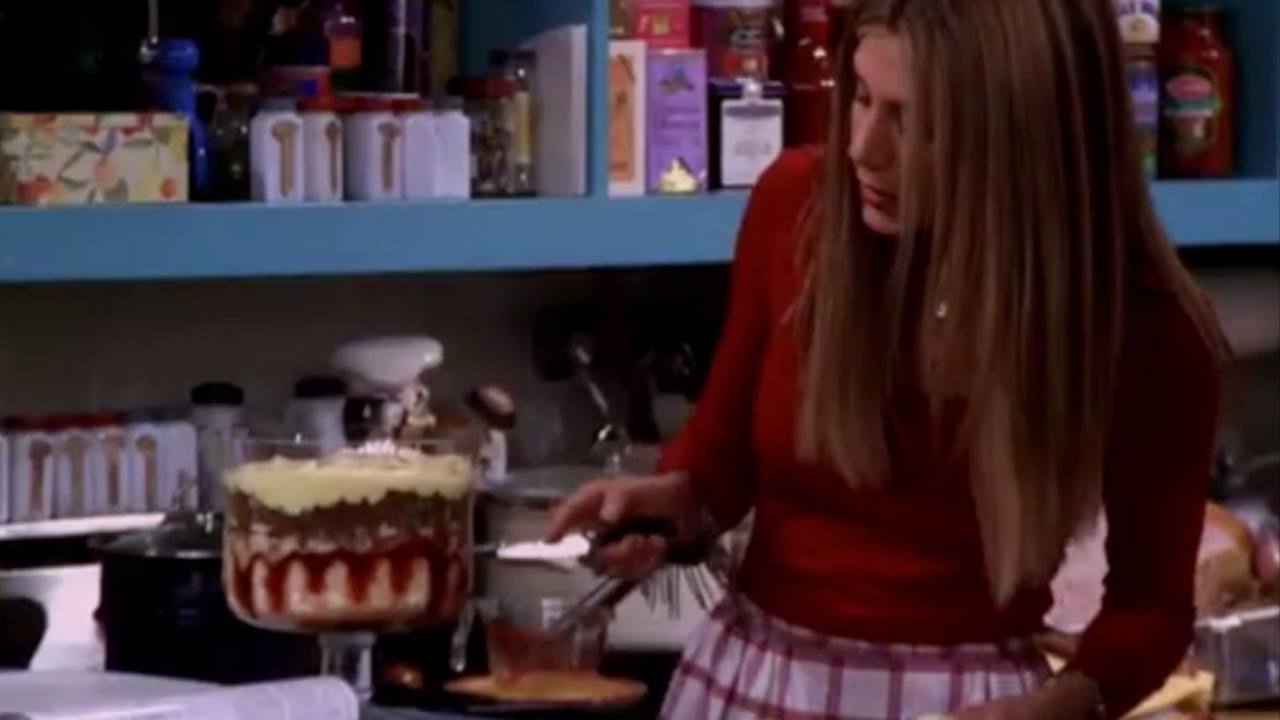
Trifle
There’s an episode of Friends where Rachel, a notoriously ungifted cook, is in charge of dessert.
Unbeknownst to her, two pages of the...

Deal or No Deal
High stakes, big money, and a tricky choice. That’s the world of Deal or No Deal.
My cousin Warwick recently stepped into it and...
